


Accredited Vibration Testing Lab You Can Trust
Testrium is a leading vibration testing lab serving automotive, aerospace, defense, electronics, and transportation industries across North America. Our vibration testing services help manufacturers validate product reliability, meet regulatory requirements, and bring safer products to market.
Our accredited facility features multiple electrodynamic shaker systems capable of replicating the exact vibration conditions your products will encounter during transit, operation, and extreme environmental exposure. Whether you need qualification testing to industry standards or custom test profiles based on field data, our experienced team delivers accurate, repeatable results.
What sets our vibration testing lab apart:
- ISO 17025 accreditation ensuring internationally recognized test results
- In-house fixture design, fabrication, and qualification capabilities
- Combined vibration and temperature testing with our AGREE chamber
- Over 20 years of hands-on vibration testing experience
- Fast turnaround times with multiple shaker systems available
Types of Vibration Testing We Perform
Our vibration testing lab offers a complete range of test methods to evaluate product performance under various mechanical stress conditions.
Sine (Sinusoidal) Vibration Testing
Sine vibration testing applies a single frequency at a time, sweeping across a defined frequency range. This method identifies resonant frequencies where your product experiences maximum response. Sine testing is essential for:
- Resonance search and identification
- Resonance dwell testing for fatigue analysis
- Fixture and shaker validation
- Understanding structural response characteristics
Random Vibration Testing
Random vibration testing applies multiple frequencies simultaneously, creating a more realistic simulation of real-world environments. This method is preferred for:
- Transportation and shipping simulation
- Operational environment replication
- Product qualification to military and commercial standards
- Accelerated life testing
Sine-on-Random Vibration Testing
This combined approach overlays sinusoidal vibrations onto a random vibration background. Sine-on-random testing simulates complex operational environments such as:
- Aircraft and helicopter operations
- Vehicle powertrains under load
- Industrial machinery with rotating components
- Military vehicle operations
Shock Testing
Our vibration testing lab also performs mechanical shock testing to evaluate product response to sudden impacts and transient events. We offer:
- Classical shock pulses (half-sine, sawtooth, trapezoidal)
- Shock Response Spectrum (SRS) testing
- Drop and impact simulation
- Pyroshock simulation
Combined Environmental Testing
Using our AGREE chamber, we perform vibration testing simultaneously with temperature and humidity extremes. This combined approach reveals failure modes that single-factor testing might miss.
- Temperature range: -70°C to +120°C
- Humidity: Up to 95% RH
- Temperature ramp rate: Up to 20°C per minute
- Simultaneous vibration exposure
Vibration Testing Laboratory Capabilities
Our vibration testing services are backed by significant equipment investments and technical expertise. Testrium’s facility is structured to handle projects of any size, from small electronic components to large industrial assemblies.
Electrodynamic Shaker Systems
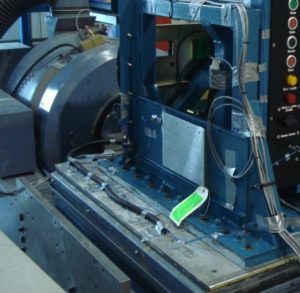
- Force Range: 6,000 lbf to 15,400 lbf
- Frequency Range: DC to 3,000 Hz
- Maximum Displacement: 50 mm (2 inches)
- Maximum Acceleration: 100 g
- Payload Capacity: Up to 455 kg (heavier loads with supplementary support)
Vibration Control Systems
- Control Channels: Up to 40 accelerometer inputs
- Data Acquisition: 40-channel simultaneous recording
- Control Modes: Sine, random, sine-on-random, narrow band random-on-random
- Shock Profiles: Classical shock, SRS, transient capture
AGREE Chamber Specifications
Our AGREE chamber enables combined environmental testing, exposing products to vibration while simultaneously cycling through temperature and humidity extremes.
- Temperature: -70°C to +120°C
- Humidity: Up to 95% RH
- Ramp Rate: Up to 20°C per minute
- Internal Dimensions: 1.37m L × 1.37m W × 1.00m H
- Door Opening: 1.37m W × 1.00m H
Multiple Shaker Availability
With multiple electrodynamic shaker systems in our vibration testing lab, we offer flexible scheduling and faster turnaround times. This capacity allows us to accommodate urgent projects and run multiple test programs simultaneously.
Industries We Serve
Our vibration testing services support manufacturers across diverse industries, each with unique requirements and applicable standards.
Automotive Vibration Testing
We test automotive components, assemblies, and systems to OEM specifications and international standards. Our vibration testing lab regularly performs:
- Component qualification to GMW, SAE, and ISO standards
- Squeak and rattle evaluation
- Durability testing for interior and exterior components
- Powertrain and drivetrain vibration analysis
Common Standards: GMW 3172, SAE J1211, SAE J1455, ISO 16750-3
Aerospace & Defense Vibration Testing
Mission-critical hardware demands rigorous vibration qualification. Our team has extensive experience with military and aerospace test methods.
- MIL-STD-810 environmental testing
- DO-160 airborne equipment qualification
- Defense system component testing
- Satellite and space hardware validation
Common Standards: MIL-STD-810, MIL-STD-167, MIL-STD-202, RTCA DO-160, DEF STAN 00-35
Electronics & Telecommunications
Electronic assemblies and telecommunications equipment require vibration testing to ensure reliability throughout their operational life.
- PCB assemblies and electronic enclosures
- Telecommunications infrastructure equipment
- Consumer electronics and IT hardware
- Power supplies and battery systems
Common Standards: IEC 60068-2-6, IEC 60068-2-64, Telcordia GR-63-CORE
Rail & Transportation
Railway equipment must withstand continuous vibration throughout decades of service. Our vibration testing services validate:
- Rolling stock components and assemblies
- Signaling and control equipment
- Onboard electronics and displays
- Track-side infrastructure equipment
Common Standards: EN 61373, IEC 61373, AREMA Part 11.5.1, JIS E 3014
Packaging & Shipping
We help manufacturers and logistics companies validate packaging designs to protect products during transit. Our ISTA-certified testing includes:
- Transport simulation testing
- Package optimization studies
- Damage boundary determination
- Distribution hazard simulation
Common Standards: ISTA 1B, 2A, 3A, 3F; ASTM D4169, ASTM D999
Medical Devices
Medical equipment reliability can directly impact patient safety. Our vibration testing lab supports:
- Device qualification and validation
- Transport simulation for sensitive equipment
- Regulatory submission support
- IEC 60601 compliance testing coordination
Vibration Testing Standards
Our vibration testing services cover a comprehensive range of international, military, and industry-specific test standards. Testrium’s technical staff are experienced with automotive, rail transport, electronics, defense, and shipping test methods.
Military & Defense Standards
MIL-STD-810 E/F/G/H (Methods 514, 519), MIL-STD-167, MIL-STD-202 E/F/G (Methods 201, 204, 214), MIL-STD-883 G/H (Methods 2005, 2007), MIL-STD-1344A (Method 2005), MIL-E-5272, DEF STAN 00-35, DEF STAN 08-123
Automotive Standards
GMW 3172, SAE J575, SAE J1211, SAE J1455, SAE J1810, ISO 16750-3
International Standards (IEC/ISO)
IEC 60068-2-6, IEC 60068-2-64, IEC 60068-2-53, IEC 61373, IEC 60945 Section 8.7, IEC 60079-29, ISO 1940-1, ISO 10816-1/6, ISO 16750-3
Seismic & Structural Standards
IEEE 344, IEEE 693, ICC AC-156, ASCE 7-10, California OSHPD CAN 2-1708A.5
Rail Standards
EN 61373, BS EN 61373, BS EN 50155, AREMA Part 11.5.1, JIS D 1601, JIS E 3014, NEN-ISO 10326
Packaging & Transportation Standards
ISTA 1B, 1C, 1E, 2A, 2B, 2D, 3A, 3C, 3D, 3F, 3G, 7B, 7D, ASTM D4169, ASTM D999, ASTM D4728, ASTM C192/C192M, ASTM D395, ASTM E587, UN ST/SG/AC.10/11/Rev.5 Para. 38.3.4.3
Telecommunications Standards
Telcordia GR-63-CORE 5.4.2, 5.4.3
Electronics Standards
BS EN 60068-2 Series (-6, 50, 51, 53, 64), JEDEC JESD22 B103B
Other Industry Standards
VDI 2057-1,2, VDI 2059-1,3,4,5
Don’t see your standard listed? Contact us to discuss your specific requirements. Our team has experience with hundreds of test specifications across all industries.
In-House Vibration Test Fixture Design & Manufacturing
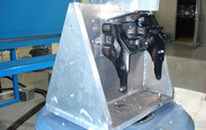
One capability that sets Testrium apart from other vibration testing labs is our complete in-house fixture design, fabrication, and qualification service.
Why Fixtures Matter
The fixture connecting your product to the shaker directly impacts test accuracy. A poorly designed fixture can introduce resonances that contaminate test data, leading to false failures or missed defects. Our engineering team designs fixtures specifically optimized for your product and test requirements.
Our Fixture Process
1. Design
Our engineers create fixture designs based on your product geometry, weight distribution, and mounting requirements. We use FEA (Finite Element Analysis) to optimize designs before fabrication.
2. Fabrication
All fixtures are manufactured in-house using precision machining processes. This gives us complete control over quality and timeline.
3. Qualification
Every fixture undergoes vibration characterization on our shakers. We document the dynamic response at each product mounting location and provide an ISO 17025 accredited Qf Assured qualification report.
Benefits of Our Fixture Service
- Faster project completion – No waiting for third-party fixture suppliers
- Lower total cost – Fixture design and testing bundled with your project
- Better test accuracy – Fixtures optimized for your specific product
- Documented performance – Full qualification data for your records
Our Vibration Testing Process
Working with Testrium is straightforward. Here’s what to expect when you engage our vibration testing services.
Step 1
Get a Quote
Contact us with your requirements. Receive a detailed quote within 24-48 hours.
Step 2
Test Planning
Our engineers develop a comprehensive test plan with sequences and pass/fail criteria.
Step 3
Fixture Design
If required, our team designs and fabricates custom fixtures in-house.
Step 4
Test Execution
Products are mounted, instrumented, and tested with real-time monitoring.
Step 5
Reporting
Receive comprehensive ISO 17025 accredited test reports with full documentation.
How to Choose a Vibration Test Lab
Not every vibration test lab can run every programme. These are the six things worth confirming before you commit a schedule or a sample.
Accreditation scope, not just accreditation
A lab can hold ISO/IEC 17025 accreditation and still be unaccredited for the specific test you need. Ask for the scope document and check that your standard, axis and level are named on it. In North America the accrediting body is usually A2LA or NVLAP; Testrium is A2LA-accredited to ISO/IEC 17025. Ask us for the scope and we will tell you plainly whether your test falls inside it.
Shaker capability against your actual profile
Match force, frequency, displacement and payload to your test, not to the lab’s headline number. Our electrodynamic systems run 6,000–15,400 lbf, DC–3,000 Hz, 50 mm displacement, 100 g and payloads to 455 kg, with an AGREE chamber for combined temperature, humidity and vibration.
Fixture capability in-house
A poor fixture amplifies or damps resonance and quietly invalidates the data. A vibration testing laboratory that designs, machines and qualifies fixtures in-house controls that risk and does not add a vendor to your critical path. We do all three under one roof.
Turnaround you can schedule against
Ask how many shakers are available and what the realistic queue is, not the best case. We quote within 24–48 hours and run multiple systems so a single busy shaker does not become your bottleneck.
Engineering involvement, not just machine time
The value of a vibration testing lab shows up in test planning — profile derivation, pass/fail criteria, instrumentation, and what to do when the unit fails at 40% of the profile. Talk to the engineer who will run your test before you book it.
Reporting and data you can hand to a customer
Confirm you receive the accredited report, the measured control and response data, and the fixture qualification record — not a pass/fail summary. Ask what the deliverable contains before the test, not after.
Frequently Asked Questions
What is vibration testing?
Vibration testing is a reliability evaluation method that subjects products to controlled mechanical vibrations replicating conditions encountered during transit, operation, or environmental exposure. Testing is performed in an accredited vibration testing lab to ensure products perform safely and reliably throughout their intended lifespan.
What is a vibration testing lab?
A vibration testing lab is a specialized facility equipped with electrodynamic shaker systems, environmental chambers, and precision instrumentation to perform controlled vibration tests. Accredited labs like Testrium follow standardized procedures and maintain calibrated equipment to deliver accurate, repeatable test results.
What is the difference between sine and random vibration testing?
Sine vibration testing applies one frequency at a time, sweeping through a range to identify resonant frequencies. Random vibration testing applies multiple frequencies simultaneously, better simulating real-world conditions like transportation or operational environments. Many test programs include both methods.
What industries require vibration testing?
Vibration testing is required across automotive, aerospace, defense, electronics, telecommunications, medical devices, railway, and packaging industries. Most products that move, ship, or operate in dynamic environments benefit from vibration qualification testing.
What standards do your vibration testing services follow?
Our vibration testing services comply with military standards (MIL-STD-810, MIL-STD-167, MIL-STD-202), international standards (IEC 60068, ISO 16750), automotive standards (GMW, SAE), aerospace standards (DO-160), and packaging standards (ISTA, ASTM). We test to virtually any published specification.
Can you perform combined environmental testing with vibration?
Yes. Our AGREE chamber performs vibration testing simultaneously with temperature cycling from -70°C to +120°C and humidity up to 95% RH. Combined testing reveals failure modes that may not appear under single-factor testing conditions.
What is an AGREE chamber?
An AGREE chamber (Advisory Group on Reliability of Electronic Equipment) combines vibration testing with rapid temperature and humidity cycling. Our chamber achieves temperature transition rates up to 20°C per minute while the product is under vibration.
Do you design and manufacture test fixtures?
Yes. Testrium offers complete in-house fixture design, fabrication, and qualification. Every fixture we manufacture includes an ISO 17025 accredited qualification report documenting dynamic response characteristics at each mounting location.
How long does vibration testing take?
Test duration depends on the applicable standard, product complexity, and number of test conditions. Simple qualification tests may complete in hours, while comprehensive programs involving multiple axes and environmental conditions may require several days. Contact us with your requirements for a timeline estimate.
What size and weight products can you test?
Our shakers accommodate products weighing up to 455 kg. Heavier products can be tested with supplementary support systems. Our largest shaker delivers 15,400 lbf with displacement up to 50 mm. Contact us to discuss your specific product dimensions and weight.
How do I get started?
Contact us by phone at 905-738-0447 or email info@testrium.com with your testing requirements. We’ll provide a detailed quote and timeline for your vibration testing project.
See Our Vibration Testing Lab in Action
Related Testing Services
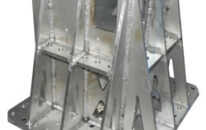
Vibration Fixture Manufacturer
Custom fixture design, fabrication, and ISO 17025 qualification for your vibration testing programs.
Mechanical Shock Testing
Evaluate product response to sudden impacts, drops, and transient mechanical events.
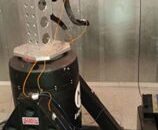
Buzz, Squeak & Rattle Testing
Identify and eliminate unwanted noise sources in automotive interiors and assemblies.
Temperature & Humidity Testing
Validate product performance across extreme temperature and humidity conditions.