

Accredited Mechanical Shock Testing Lab You Can Trust
Testrium is a leading mechanical shock testing lab serving automotive, aerospace, defense, electronics, and transportation industries across North America. Our mechanical shock testing services help manufacturers validate product survivability against sudden impacts, drops, and transient acceleration events that occur during handling, transit, and operational use.
Our accredited facility features electrodynamic shaker systems and a pneumatic-assist drop-shock machine capable of generating highly repeatable shock events up to 3,000 g. Whether you need classical shock pulse qualification, Shock Response Spectrum (SRS) testing, or combined environmental exposure, our experienced team delivers accurate, traceable results.
What sets our mechanical shock testing lab apart:
- ISO 17025 accreditation ensuring internationally recognized test results
- Classical shock pulses: half-sine, sawtooth, and trapezoidal waveforms
- SRS testing for complex transient event simulation
- Pneumatic-assist capability reaching 3,000 g acceleration
- In-house fixture design, fabrication, and qualification
Types of Mechanical Shock Testing We Perform
Our mechanical shock testing lab offers a complete range of shock test methods to evaluate product response under sudden acceleration and impact events.
Classical Shock Pulse Testing
Classical shock testing applies a single, well-defined acceleration pulse to the product. This method is widely used across military, automotive, and electronics standards for product qualification. Available waveforms include:
- Half-sine shock pulses
- Sawtooth (terminal peak) shock pulses
- Trapezoidal shock pulses
- Custom waveform generation
Shock Response Spectrum (SRS) Testing
SRS testing replicates complex real-world shock events that cannot be described by a single classical pulse. The test system synthesizes a transient waveform that produces the specified frequency-domain response. SRS testing is essential for:
- Military and aerospace hardware qualification
- Pyroshock simulation
- Field-recorded shock event replication
- Transportation and drop impact simulation
Drop and Impact Testing
Our pneumatic-assist drop-shock machine delivers high-acceleration impacts for products that must survive severe handling, shipping drops, or collision events. Capabilities include:
- Accelerations up to 3,000 g
- Repeatable impact events
- Multiple orientation testing
Combined Environmental Shock Testing
Using our AGREE chamber, we perform shock testing in combination with temperature and humidity extremes. This combined approach reveals failure modes that single-factor testing might miss.
- Temperature range: -70°C to +120°C
- Humidity: Up to 95% RH
- Simultaneous vibration and thermal cycling
- Rapid temperature transitions up to 20°C per minute
Mechanical Shock Testing Laboratory Capabilities
Our mechanical shock testing services are backed by significant equipment investments and technical expertise.
Electrodynamic Shaker Systems
- Maximum Acceleration: 100 g
- Maximum Displacement: 63.5 mm (2.5 inches)
- Payload Capacity: Up to 1,000 kg
- Control Channels: Up to 40 accelerometer inputs
- Shock Profiles: Classical shock, SRS, transient capture
Pneumatic-Assist Drop-Shock Machine
- Maximum Acceleration: 3,000 g
- Waveform Types: Half-sine, sawtooth, trapezoidal
Industries We Serve
Our mechanical shock testing services support manufacturers across diverse industries.
Aerospace & Defense
Mission-critical hardware demands rigorous shock qualification. Our team has extensive experience with MIL-STD-810, DO-160, and defense system testing.
Common Standards: MIL-STD-810, MIL-STD-167, MIL-STD-202, RTCA DO-160, DEF STAN 00-35
Automotive
We test automotive components to OEM specifications for impact, collision, and handling events.
Common Standards: GMW 3172, SAE J1211, SAE J1455, ISO 16750-3
Electronics & Telecommunications
Electronic assemblies must survive drop impacts and shipping shocks throughout their lifecycle.
Common Standards: IEC 60068-2-27, IEC 60068-2-29, Telcordia GR-63-CORE
Packaging & Shipping
We validate packaging designs to protect products during transit with ISTA-certified testing.
Common Standards: ISTA 1B, 2A, 3A, 3F; ASTM D4169, ASTM D999
Mechanical Shock Testing Standards
Military & Defense
MIL-STD-810 E/F/G/H (Methods 516, 517), MIL-STD-167, MIL-STD-202 E/F/G (Methods 201, 204, 213, 214), MIL-STD-883 G/H (Methods 2002, 2007), MIL-E-5272, DEF STAN 00-35, DEF STAN 08-123
Automotive
GMW 3172, SAE J575, SAE J1211, SAE J1455, SAE J1810, ISO 16750-3
International (IEC/ISO)
IEC 60068-2-27, IEC 60068-2-29, IEC 61373, ISO 16750-3
Seismic & Structural
IEEE 344, IEEE 693, ICC AC-156, ASCE 7-10
Packaging & Transportation
ISTA 1B, 2A, 3A, 3F; ASTM D4169, ASTM D999, ASTM D4728
Aerospace
RTCA DO-160 E/F/G
Frequently Asked Questions
What is mechanical shock testing?
Mechanical shock testing subjects products to sudden, high-acceleration events that simulate impacts, drops, collisions, and other transient forces encountered during handling, shipping, and operational use. Testing is performed in an accredited lab to verify products can survive these events without damage or performance degradation.
What is the difference between shock testing and vibration testing?
Vibration testing applies continuous or repeated mechanical oscillations over an extended period, while shock testing applies a single, short-duration, high-intensity acceleration event. Many test programs include both methods to fully qualify a product.
What is SRS testing?
Shock Response Spectrum (SRS) testing measures and replicates the frequency content of complex real-world shock events. Instead of a simple classical pulse, SRS testing synthesizes a transient waveform that produces a specified response across a range of frequencies, making it ideal for simulating pyroshock, field-recorded impacts, and other complex events.
What acceleration levels can you achieve?
Our electrodynamic shakers deliver up to 100 g for products weighing up to 55 kg. Our pneumatic-assist drop-shock machine reaches 3,000 g for products up to 23 kg.
What shock pulse shapes are available?
We offer half-sine, sawtooth (terminal peak), and trapezoidal classical shock pulses, as well as SRS-synthesized waveforms for complex transient event simulation.
Can you combine shock testing with environmental conditions?
Yes. Our AGREE chamber performs shock and vibration testing simultaneously with temperature cycling from -70°C to +120°C and humidity up to 95% RH.
What industries require mechanical shock testing?
Mechanical shock testing is required across aerospace, defense, automotive, electronics, telecommunications, medical devices, railway, and packaging industries. Any product that may experience sudden impacts or drops during its lifecycle benefits from shock qualification.
How long does mechanical shock testing take?
Individual shock events are measured in milliseconds, but complete test programs involving multiple axes, multiple shock levels, and pre/post-functional testing may require hours to days depending on complexity. Contact us with your requirements for a timeline estimate.
How do I get started?
Contact us by phone at 905-738-0447 or email info@testrium.com with your testing requirements. We’ll provide a detailed quote and timeline for your mechanical shock testing project.
Related Testing Services
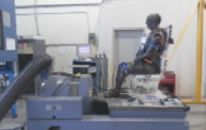
Vibration Testing Services
Vibration testing can be applied using either sine, random, sine-on-random or narrow band …
BSR Testing
Annoying vehicle noises in vehicle interiors occur when incompatible contacting material pairs move in relation to each other.
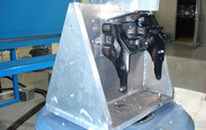
Vibration Testing Fixtures
Almost anything that requires vibration testing also requires vibration testing fixtures to attach the product …

Product Testing: Automobile Manufacturing Industry
To ensure that their products meet the consumer’s …